


Pearls, one of nature’s most treasured gifts, have been hailed as the “Queen of Gems” since ancient times. From the palaces of Egyptian pharaohs to the wedding feasts of European royalty, pearls have long stood as symbols of nobility and elegance. Today, whether it’s a classic pearl necklace or a modern pearl earring design, pearls maintain an irreplaceable status in the jewelry world.
In this Ultimate Guide to Pearls, you will delve into the fascinating process of pearl formation, explore the unique appeal of both freshwater and saltwater pearls, learn how to accurately evaluate their value, and discover expert tips on spotting imitations and caring for your pearls. Whether you’re a pearl enthusiast, a jewelry designer, or a collector, this guide offers practical knowledge and professional advice to help you better understand and appreciate these natural marvels.
Let’s step into the enchanting world of pearls together and uncover their breathtaking secrets!
The History and Culture of Pearls
From ancient times, pearls have been prized in royal courts and religious ceremonies for their unique luster and rarity. They are not only among nature’s most beautiful gifts but also reflect different civilizations’ longing for perfection and sanctity. In the ancient East, pearls were regarded as symbols of good fortune and completeness. In cultures such as China, India, and Persia, pearls often appeared in royal ceremonies and religious rituals, representing auspiciousness, wisdom, and longevity. For instance, in ancient Chinese literature, pearls were frequently referred to as “teardrops” or “dragon pearls,” signifying divine blessings from heaven and the divine right of rulers.
In the West, pearls have enjoyed an equally enduring appeal. From ancient Rome through the Renaissance, pearls were viewed as emblems of purity and nobility. European aristocrats and royals loved wearing pearls not only because of their rarity and luxurious appearance, but also for the gentle, elegant impression they convey. By the Victorian era, pearls had become a symbol of feminine grace and sophistication, widely used in jewelry design and everyday wear—signifying both status and refined taste.

As time progressed, pearls continued to spark new life in the worlds of fashion and art. In the 20th century, movie stars and style icons like Audrey Hepburn helped cement pearls as a timeless classic. Meanwhile, jewelry designers began blending the traditional allure of pearls with modern design concepts, employing innovative craftsmanship and diverse styling to create pieces that preserve a classic charm while embracing a contemporary edge. This fusion of tradition and modernity has made pearls not only a symbol of nobility but also a powerful means of expressing personality and creativity.
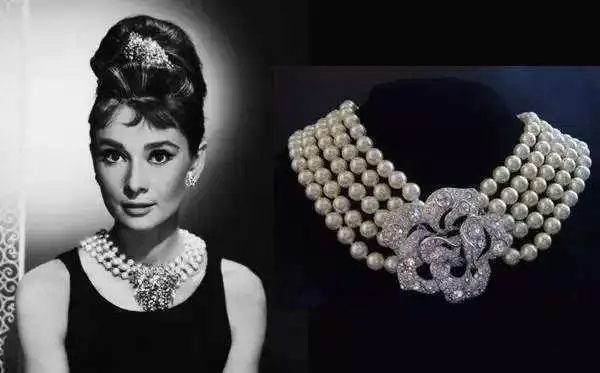
Today, whether showcased on the silver screen, strutted on fashion runways, or worn in everyday life, pearls still shine with captivating radiance and lasting charm. Their cross-temporal aesthetic value allows us to reflect on history’s grandeur while inspiring modern designers to continually pursue the perfect blend of art and technology.
Pearl Farming and Production Techniques
Pearl Cultivation Process
1. Selecting the Mother Mollusk
When choosing a mother mollusk, cultivators typically consider factors such as the mollusk’s overall health, the integrity of its shell, and its genetic traits to improve the success rate and quality of future pearl production. In freshwater settings, the Triangle Sail Mussel is commonly used, while in saltwater environments, Black-Lipped, White-Lipped, or Akoya Oysters are often preferred. The selection process also involves assessing ecological indicators such as water quality, temperature, and salinity to ensure the mollusks can adapt and thrive. In addition, farmers observe the brightness and shape of the shell layers to predict the potential luster and roundness of the pearls, thereby laying the groundwork for superior pearl quality from the start.

2. Surgical Nucleation
Once the mother mollusk reaches maturity, it is transferred to a specialized sterile or semi-sterile area for nucleation. Skilled technicians carefully position the pearl nucleus (or sometimes just soft tissue) in the mollusk’s mantle at a suitable spot, guiding the direction and intensity of nacre secretion. Specific nucleation methods vary among different types of pearls. For example, saltwater pearls often employ a single-nucleus technique to achieve a round shape, while some freshwater pearls may use multiple or no nuclei to increase yield or create diverse shapes.

3. Pearl Cultivation
After the nucleation or tissue implantation process, the mollusks are returned to their cultivation waters or placed in hanging culture baskets, beginning a pearl-growing period that can last from several months to several years. During this stage, farmers regularly inspect and clean the shells, maintain appropriate water flow, dissolved oxygen levels, and nutrient supply, and take precautions against parasites and diseases. As the mollusks grow, they continuously secrete nacre, gradually enveloping the nucleus or tissue layer by layer, eventually forming pearls with specific luster, shape, and thickness. Freshwater pearls generally have a shorter growth cycle and can be harvested in about 1–3 years, while saltwater pearls may require more time to attain ideal nacre thickness and sheen.

4. Harvesting the Pearls
When cultivators determine that pearls have reached harvest standards—by examining shell growth and measuring nacre thickness—they collect the mother mollusks and gently open the shells to remove the finished pearls. The pearls then undergo an initial cleaning and sorting process, where they are graded according to size, shape, luster, and surface imperfections. Exceptional pearls may be sent directly to the high-end jewelry market or to professional appraisal agencies for further evaluation. The remaining pearls move on to subsequent processing and sales stages. Throughout this process, the farm will preserve quality mother mollusks for breeding stock, laying the groundwork for cultivating the next generation of pearls.

Post-Processing Techniques
After pearls are extracted from the mollusk, they typically undergo a series of post-processing steps. These procedures help unify their appearance, remove surface impurities, and enhance their luster, making them more suitable for various jewelry designs or display purposes. The end goal is to present consumers with pearls that have a refined texture and color.
1. Cleaning and Impurity Removal
Once harvested, pearls generally receive a basic cleaning to eliminate any bodily secretions, mucus, or surface debris. Farms or processing facilities usually employ mild soapy water, diluted saltwater, or specialized cleaning solutions, combined with a soft cloth or a soft-bristled brush, to gently wipe the pearls without scratching their surface. This stage does not harm the pearl’s natural properties or adversely affect its luster and structure; rather, it simply removes superficial flaws and maintains hygiene.

2. Optimizing the quality of pearls
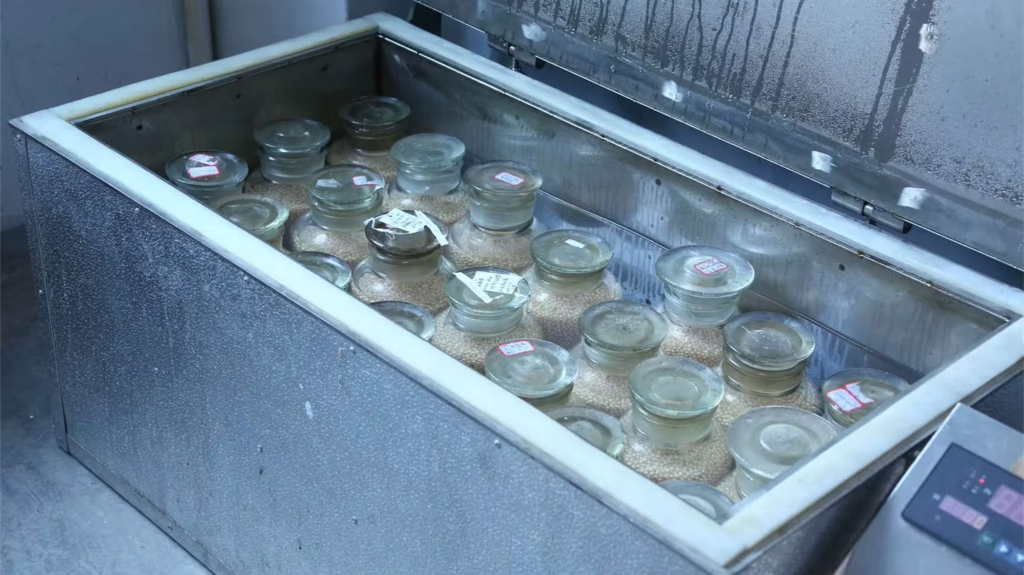
As the saying goes, there are no perfect pearls, so generally speaking, pearl farms will uniformly carry out some optimization steps on the pearls after receiving the pearls that have been initially cleaned, including bleaching, brightening, and polishing. Many people become cautious when they hear these terms, worrying that these processes are a form of “faking” the natural state of the pearls. In fact, bleaching is relatively common in the treatment of many white freshwater pearls (generally, pearls of other colors will not undergo this step), and it is recognized in the industry. Whether it is bleaching, brightening or other processing techniques, they are all “martial arts secrets” developed by pearl companies with a lot of investment and a lot of experiments. Pearl breeding technology and pearl processing technology are the two most core competitive advantages of pearl companies, and neither is dispensable.
3. Polishing and Finishing
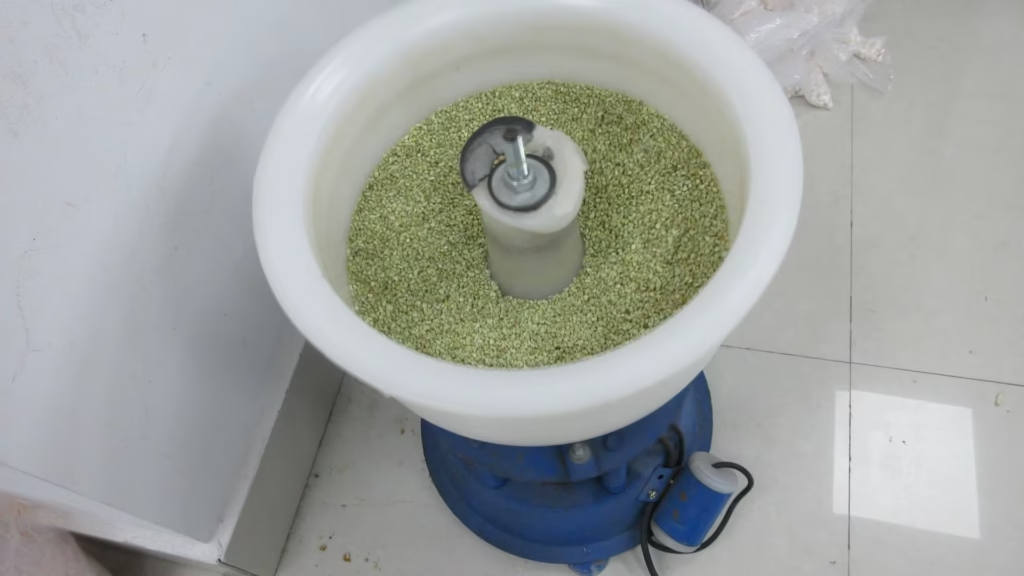
After cleaning and bleaching, pearls may also undergo moderate polishing. Typical techniques include tumbling or using fine abrasives to remove minor surface bumps and marks, resulting in a more uniform sheen. In general, such polishing does not significantly alter a pearl’s original structure or thickness and does not strip away its natural attributes. In rare instances, minimal surface filling or coating treatments may be applied—though these are uncommon, especially for high-end pearls. If you have questions about whether a pearl has been coated, you can request a test report from the seller.
4. Grading and Accessory Work
Finally, pearls are graded based on size, shape, luster, surface quality, and color. This grading determines their path to the next stage of production. Some pearls will be made into necklaces or bracelets, requiring consistency in size and tone; others may be mounted individually in rings or pendants. During these processes, jewelers may drill holes, add metal components, or perform gem-setting techniques to accommodate various designs. When carried out correctly, drilling does not significantly compromise a pearl’s durability. If you are purchasing or customizing a piece, it is advisable to discuss drilling methods and metal choices with the seller in advance to ensure the finished product aligns with your expectations.

Common varieties of pearls
Freshwater Pearls
Freshwater pearls are primarily cultivated from freshwater mussels, most notably the Triangle Sail Mussel (Hyriopsis cumingii), which is widely found in the rivers and lakes of China and other parts of Asia. Because the freshwater environment is relatively mild and easier to manage, the cost of cultivation is lower, and the growth rate is faster. As a result, the market is filled with a remarkable array of freshwater pearl varieties and styles.
The Five Main Types of Freshwater Pearls
1. Nucleus-Free Pearls
Nucleus-free pearls are among the most common types of freshwater pearls. During cultivation, only a tiny piece of mantle tissue is inserted into the mussel (for example, the Triangle Sail Mussel), without using a solid bead. This triggers the secretion of nacre to form the pearl. Such pearls generally range from 4mm to 12mm in diameter, though sizes can vary widely. Because they are composed entirely of nacre, they often feature a thicker outer layer and a softer, more delicate luster. Their shapes span near-round, oval, rice-shaped, and various irregular forms.
A standout characteristic of nucleus-free pearls is their natural sheen and the absence of any “hollow” effect that can occur if a nucleus separates from the nacre layers. This structural integrity tends to enhance durability. Furthermore, since no bead is used, multiple pearls can be cultivated in one mussel, leading to relatively high yields.
2. Nucleated Pearls
Nucleated pearls involve placing a small bead (often made of shell or another material) inside the mussel at the start of cultivation. The mollusk then secretes nacre around this nucleus. Because the bead provides a defined shape, these pearls are typically more uniform and round, often measuring between 8mm and 14mm or even larger. They frequently exhibit a more pronounced, mirror-like luster.
However, compared to nucleus-free pearls, nucleated pearls tend to have a thinner nacre layer. This makes strict control of farming cycles and water conditions essential to maintaining consistent quality and luster. Due to their round or near-round form, nucleated pearls are highly sought-after in the commercial market and fashion jewelry designs, commonly used for classic strand necklaces or matched earring sets.
 $2.31 - $2.57Select options This product has multiple variants. The options may be chosen on the product page
You save


3. Baroque Pearls
“Baroque” pearls refer to pearls with irregular shapes and free-flowing lines. These can originate from both freshwater and saltwater environments. In freshwater cultivation, baroque shapes often emerge when the mussel’s natural growth and secretion processes don’t perfectly “mold” the pearl shape, or when the nucleus shifts. They can take on twisted, curved, pear-like, flattened, or any number of other distinctive forms. Their sizes can range from just a few millimeters to more than a centimeter.
While they lack the uniformity of round pearls, baroque pearls carry a certain artistic flair and uniqueness that make them stand out. Designers love to highlight their natural curves in imaginative jewelry pieces, giving them strong visual impact and individuality.
-
-
-
-
$45.00 - $50.00Select options This product has multiple variants. The options may be chosen on the product page
You save


4. Edison Pearls
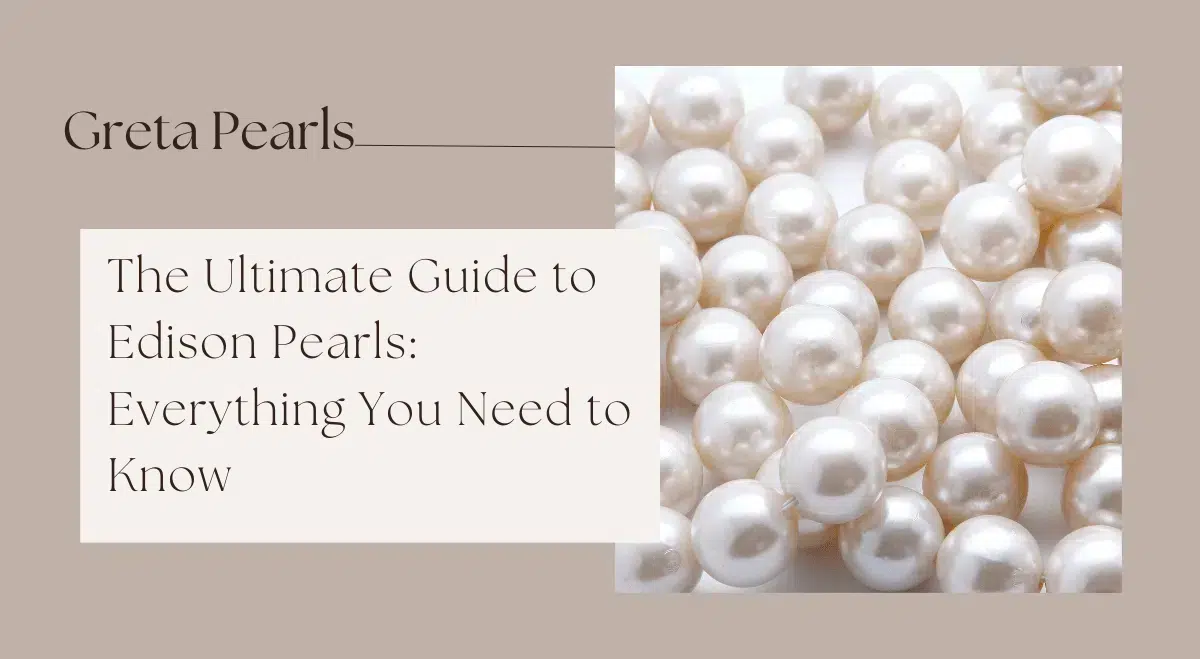
Edison pearls represent a recent innovation in freshwater pearl cultivation, involving advanced nucleation techniques. They often boast larger sizes—usually from 10mm to 16mm—and a luster close to that of saltwater pearls. Edison pearls also display a wider color spectrum, including white, pink, and purple, typically with soft overtones.
Because only one or two pearls are grown per mussel, each has ample space and nutrients to develop, resulting in a denser layer of nacre and a brighter sheen. With stricter cultivation requirements and lower yields, Edison pearls are considered a high-end category of freshwater pearls that seamlessly combine quality and craftsmanship.
-
-
-
$9.89 - $10.99Select options This product has multiple variants. The options may be chosen on the product page
You save -


5. Keshi Pearls
Keshi pearls often occur during nucleated cultivation when the mollusk accidentally expels the bead or fails to bond with it, leading to a pearl composed entirely of nacre. They can also form naturally in some freshwater conditions. Because they lack a traditional nucleus, Keshi pearls usually display a strong luster and come in a wide variety of organic, irregular shapes.
They are commonly smaller, typically 2mm to 7mm, with their quirky forms especially appealing to designers seeking one-of-a-kind pieces. Many pearl connoisseurs regard Keshi pearls as “delicate natural artworks” due to their unique, unstructured beauty.
Five common colors of freshwater pearls

- White
White is the most traditional and widely available color for freshwater pearls. Their outer layers often showcase a gentle, pearlescent sheen, sometimes featuring a faint rainbow-like overtone. This coloration primarily depends on the shell’s natural pigments and the thickness of the nacre, so most white pearls require minimal artificial enhancement to achieve a pure white appearance. Because of their versatility and elegant appeal, white pearls are popular for various occasions—from everyday accessories to bridal and formal jewelry.

- Champagne
Champagne-hued pearls range between soft gold and light brown. This coloration typically arises from a combination of the mollusk’s genetic makeup and mineral content in the water. Under light, they can reveal subtle gold or apricot undertones, lending a warm yet understated luster to jewelry pieces. Since champagne pearls have a balanced tone—neither as cool as pure white nor as intense as bright gold—they pair well with many complexions and exude a natural, understated sophistication.

- Pink
Pink is a fairly common color in freshwater pearls, often resulting from naturally occurring organic pigments or specific environmental factors. The shades can vary from pale pink to pinkish-orange, evoking a distinctly feminine and romantic feel. Pink pearls have gained popularity in modern jewelry design. When paired with rose gold, white gold, or complementary gemstones, they achieve a refined, soft look that remains lively and charming.

- Purple / Lavender
Purple or lavender pearls are a hallmark of freshwater varieties, formed mainly due to pigments in the mollusk’s shell and trace elements in the water. Their color intensity can range from a light lilac to a deep violet, often accompanied by faint pink or bluish overtones. Because of their unique and relatively rare hue, purple pearls are especially prized in the market. They frequently appear in jewelry with a contemporary or artistic flair, making a bold statement that stands out from more common pearl colors.

- Iridescent / Multi-Color
Iridescent freshwater pearls reflect a rainbow of hues when viewed under different lighting and angles, potentially displaying pastel tones of pink, lavender, cream, or other blended colors. This optical effect—known as “iridescence” or “interference color”—is closely linked to the thickness and structure of the nacre, as well as the surrounding light conditions. Because each iridescent pearl can reveal multiple colors at once, they are often featured in designs that emphasize creativity and individuality, appealing to those seeking truly distinctive and colorful pieces.
Saltwater Pearls
Saltwater pearls are mainly produced in tropical and subtropical seas by oysters such as Black-Lipped, White-Lipped, and Akoya oysters. Because sea water temperature and quality are harder to control and oysters are highly sensitive to environmental changes, the farming process often spans two to three years or longer. Additionally, the higher mortality rate in cultivation results in saltwater pearls being rarer and generally more expensive than freshwater pearls. Below are three of the most iconic saltwater pearl varieties: Tahitian Pearls, South Sea Pearls, and Akoya Pearls.
Tahitian Pearls
Tahitian pearls are primarily produced by the Black-Lipped Oyster (Pinctada margaritifera) in the waters around French Polynesia. These oysters can grow up to 20–25 cm, with roomy pearl sacs that allow for medium to large pearls. Even slight shifts in water temperature or salinity can influence nacre uniformity and color. Generally, nucleation is performed only after the oyster reaches maturity, and the typical farming period is around 18–24 months.
- Size: Often between 8 and 14 mm, with some exceeding 15 mm.
- Color: Typically black or dark gray with overtones of green, blue, or purple (often called “peacock” overtones), giving them a mysterious and luxurious appeal.
- Value: Natural black pearls are rare and highly sought after for their distinctive coloration, making Tahitian pearls a favorite in the high-end jewelry market, prized for both collection and investment.
South Sea Pearls
South Sea pearls come from the White-Lipped Oyster (Pinctada maxima), which inhabits the waters around Australia, Indonesia, the Philippines, and Myanmar. These oysters are among the largest saltwater varieties, with shells that can exceed 30 cm and provide ample space for pearl growth. Cultivation usually lasts 2–4 years, requiring precise control of water quality, feeding, and regular shell cleaning to ensure stable pearl development.
- Size: Commonly 9–16 mm, though exceptionally large pearls can exceed 20 mm.
- Color: Ranges from golden to silvery white or creamy white, with the golden hue being especially coveted for its striking visual impact.
- Value: With a lengthy cultivation cycle and lower survival rate, South Sea pearls occupy a prestigious place in the world of fine jewelry and collecting, often referred to as the “giants” of the pearl family.
Akoya Pearls
Akoya pearls are typically produced by the Akoya Oyster (Pinctada fucata) along the coasts of Japan, as well as parts of China and Vietnam. Though smaller in size (with an average shell length of about 6–10 cm), these oysters excel at creating perfectly round pearls. The farming process involves close attention to water temperature, nutrient levels, and cleanliness. Farmers may move the oysters multiple times over at least a year to ensure ideal luster and shape.
- Size: Usually 6–8 mm. Pearls of 9 mm or slightly larger are extremely rare and command very high prices.
- Color & Luster: Known for a beautiful mirror-like luster, often accompanied by subtle pink or silver overtones.
- Value: Thanks to their round shape and high surface quality, Akoya pearls are often used in classic pearl necklaces and earring sets, symbolizing timeless elegance.
How to distinguish freshwater pearls from saltwater pearls
- Observe Luster and Color
Saltwater pearls typically exhibit brighter, more transparent luster with stronger mirror-like reflections. Certain colors—like the black and gray of Tahitian pearls or the golden tones of South Sea pearls—are rarely found naturally in freshwater pearls.
If you encounter large “black freshwater pearls,” check carefully for signs of dyeing. Under strong light, look for inconsistencies in color distribution or unnatural spotting.
- Pay Attention to Size and Shape
Saltwater pearls often exceed 8 mm in size. South Sea pearls in particular can easily surpass 10 mm, and they also tend to be more uniformly round or near-round.
While freshwater pearls can be large, their shapes often vary widely, and achieving a perfectly round strand is less common. If you see a strand of perfectly round, evenly sized pearls advertised as freshwater, be sure to request a certificate or thorough inspection.
- Ask About Origin and Certificates
For pearls claimed to be “Tahitian” or “South Sea,” ask to see an authorized certificate or proof of origin. Since saltwater pearls have a lengthy growth period and limited yield, mislabeling or substituting freshwater pearls for saltwater ones is not uncommon.
Reputable certificates are generally issued by professional third-party organizations (e.g., GIA) and will specify the pearl variety, color, shape, size, and other characteristics.
- Compare Prices
When comparing pearls of similar size, roundness, and luster, saltwater pearls typically command higher prices. If you come across a “South Sea gold pearl” or “Tahitian black pearl” at an unusually low price, proceed with caution—it may be a dyed freshwater pearl or another imitation.
By combining these visual clues, certification checks, and price comparisons, you can more confidently distinguish between saltwater and freshwater pearls, ensuring a wise and satisfying purchase.
How To Evaluate Pearls
The value of a pearl is influenced by multiple factors, each contributing to its standing in both the market and among collectors. Below, you’ll find the five key evaluation criteria, along with internationally recognized testing and grading certificates to help you purchase or select pearls with greater confidence.
1.Size
For most consumers, size is often the first thing they can intuitively feel. When the luster, color and surface condition are similar, the larger the pearl, the rarer it is, and the more valuable it is for collection and investment. The common diameter of freshwater pearls is roughly 2mm to 12mm, while seawater varieties such as South Sea pearls can easily exceed 10mm, or even reach more than 20mm. The larger the volume, the longer the breeding cycle, and the investment and risk also increase accordingly, so it is more precious in the market.
2.Luster
Luster is regarded as the “soul” of pearls and is one of the most important indicators of pearl quality. High-luster pearls can still show clear mirror reflections or bright spots under soft or weak light, giving people a delicate and deep look. The tighter the structure of the nacre layer, the higher the intensity of refraction and reflection. If you can’t see obvious luster or reflection when you rotate the pearl, its value will usually be affected.
3.Color
The color of a pearl is composed of the main color and the iridescence, which includes common freshwater colors such as white, pink, champagne, and purple, as well as rare seawater colors such as gold or black. Pearls with special iridescence (such as silver, rose, peacock green, etc.) are more likely to attract attention and have higher market recognition. It should be noted that many pearls are bleached or dyed to adjust their appearance. This is a common process in the formal industry, but you should pay attention to whether the merchant tells you the truth.
4.Surface
The surface finish and defect distribution will directly affect the visual beauty and value assessment. The fewer pits, spots, cracks or irregular lines, the higher the grade of the pearl. In some grading systems, “AAA” or higher usually means that the surface is almost flawless and the gloss is excellent, while “AA” or “A” indicates slight or obvious defects. Different organizations have different definitions of surface and defects. You can judge based on the specific instructions on the certificate.
5.Nacre Thickness
Whether it is freshwater or saltwater pearls, the thickness and uniformity of the nacre layer are the key to ensuring luster and durability. For saltwater pearls with nuclei inserted, if the nacre layer is too thin, the luster will appear hollow or “floating” and will be more easily damaged; for freshwater pearls without nuclei, the whole is made of nacre, and if the layer thickness is insufficient, it will also affect the depth of light refraction. Professional testing institutions usually use X-rays to quantify the thickness of the nacre layer, and the specific measurement results will be noted in the report.
Internationally recognized pearl certificate
After considering the main quality indicators, you may wonder which reputable institutions provide objective evaluations of a pearl’s characteristics and any treatments. Below are three widely recognized certificate providers to help you make informed decisions.

GIA (Gemological Institute of America)
GIA certificates are highly trusted in the jewelry world. The report offers a detailed breakdown of the pearl’s type, size, color, luster, surface condition, and any treatments like bleaching or dyeing. If you’re purchasing high-value pearls, opting for those with GIA documentation can give you a clearer picture of quality.

PSL (Pearl Science Laboratory)
Based in Japan, PSL specializes in testing and grading saltwater pearls, including Akoya. Its reports include precise parameters of each pearl and evaluate luster and surface quality based on Japanese grading standards. For lovers of Japanese pearl culture, PSL is a credible option.
SSEF (Swiss Gemmological Institute) and Other Labs
Switzerland’s SSEF enjoys a solid reputation among European jewelry buyers and collectors. They focus on high-end natural gems and pearls, providing precise and detailed analyses. Other regional institutions, such as China’s NGTC, are also gaining international recognition. Depending on your location and needs, you can choose the testing method or certificate that suits you best.
How to tell if pearls are real or fake
I believe that many customers often worry about how to distinguish the authenticity when purchasing pearls. Although professional jewelry testing institutions can give the most authoritative and systematic identification results, there are also some simple and easy methods in daily shopping that can help you make a preliminary judgment. These methods are not 100% accurate, but they can reduce the risk of “buying fakes” to a certain extent.
Tactile friction and tooth test
A common and easy-to-operate method is to gently rub two pearls against each other or touch them on the teeth. If you feel a slight sandy feeling or tiny granular texture, it usually means that there is a natural layered structure on the surface of the pearl; if it is too smooth, it may be an imitation pearl or a plastic product. This method requires attention to moderate strength to avoid damaging the pearl surface.
Observe the punching position
Many pearl jewelry (especially necklaces or bracelets) will punch holes in the pearls for stringing or assembling metal accessories. If you can carefully observe the position of the hole (or use a magnifying glass with the permission of the clerk), real pearls usually show concentric layers or traces of superposition of nacre; if you can’t see the nacre or there are obvious signs of coating peeling, it may be an imitation or a coating-treated product.
Direct light and color changes
In a bright environment, slowly rotate the pearl and observe its luster and color from multiple angles. If the pearl shows a soft and multi-layered iridescence when the light changes, and there is no obvious color difference or patches, it is likely to be a real pearl; if the color is monotonous and lacks depth, it is likely to be just surface-painted or imitation pearls. It should be emphasized that real pearls that have been bleached or dyed may also have a more uniform color, so other methods need to be combined to make judgments.
Weight and feel comparison
Of the same size, real pearls are usually slightly thicker rather than “hollow”. You can compare two pearls of similar size at the same time. If one of them is obviously too light or feels unreal, it is likely to be a counterfeit made of artificial materials such as plastic and glass. Of course, there are also denser imitations that need further testing.
Finally, if you still have doubts after performing the above basic tests, or if you buy high-value pearls (such as South Sea gold pearls, Tahitian black pearls, etc.), it is recommended to send them to a professional jewelry testing agency for identification. Such institutions usually have equipment such as X-ray detection, fluorescence detection and microscopic observation, and can issue credible identification certificates to help you obtain more accurate results.
Pearl Care and Everyday Wear
Pearl jewelry is beloved for its gentle warmth and natural elegance. Keeping your pearls looking lustrous over the years isn’t difficult—simply pay attention to a few details when wearing and storing them. Below are some practical, easy-to-follow tips that will help your pearls retain their radiant charm.
1. Daily Wear Tips
• Put Them On Last, Take Them Off First
Whether you’re using perfume, hairspray, or other cosmetics, try to apply them before putting on your pearls. When you get home, remove your pearl jewelry first to minimize prolonged exposure to sweat and natural oils. This reduces the likelihood that chemicals or skin secretions will dull their surface.
• Be Mindful of Activities
If you plan on exercising, doing housework, or engaging in outdoor activities, it’s best to store your pearls safely beforehand. Sweat, dirt, and potential impact can cause damage, affecting the pearl’s luster or creating surface wear.
• Check Your Settings Regularly
Pearl necklaces or bracelets are often strung on silk thread and secured with metal clasps. Every so often, gently test the clasp or inspect the knots between pearls. If you notice the chain becoming loose or the pearls sliding more than usual, take them to a professional jeweler for re-stringing or repairs. This prevents sudden breakage or loss.
2. Gentle Cleaning Methods
• Wipe with a Soft Cloth
After each wear, wipe your pearls gently with a soft, dry cloth or lens cloth to remove any traces of sweat or oil. This quick step prevents grime from building up and keeps the pearls clean.
• Mild Soap Solution Soak
If your pearls need more thorough cleaning, fill a bowl with warm water and add a small amount of gentle soap or hand wash. Soak the pearls briefly, then pat them dry with a soft cloth. Avoid using strong acids, bases, bleach-based cleaners, or ultrasonic cleaners, as these can damage the pearl’s surface layers.
• Air Dry or Blot Carefully
After cleaning, let the pearls air-dry in a cool, shaded area, or use a soft towel to absorb excess moisture. Avoid using hairdryers or placing them in direct sunlight—excessive heat or dryness can dull the pearls or cause small cracks over time.
3. Proper Storage
• Separate to Prevent Scratches
Pearls have a relatively low surface hardness. Storing them with metals or gemstones can lead to scratches or abrasions. Keep them in their own soft cloth pouch or a jewelry box with padding to minimize friction or accidental knocks.
• Maintain Moderate Humidity and Temperature
Pearls are sensitive to extreme dryness or high humidity. Store them in a cool, ventilated area away from direct sunlight or heating elements. Overly dry conditions can cause subtle cracks in the nacre.
• Let Them “Breathe” Periodically
If you’re not wearing your pearls for a long stretch, take them out occasionally to check for loose knots or surface changes, and to let them reabsorb ambient moisture. This helps them retain their characteristic luminosity.
4. Periodic Professional Care
• Polishing & Refinishing
If your pearls become noticeably dull after years of wear, consult a reputable jeweler or appraisal service about polishing. Under the right conditions, professional polishing can restore much of their original shine.
• Re-Stringing & Maintenance
Over time, the silk or thread holding your pearls will lose elasticity or become fragile. It’s generally recommended to have them re-strung every 1–2 years, depending on wear frequency. This ensures your strand remains secure and the pearls properly spaced.
• Keep Certificates & Documentation
If your pearl jewelry came with an official appraisal or grading certificate, hang on to it. Such documentation will streamline any future maintenance, insurance claims, or potential resale, since it clearly identifies the pearl type, quality, and characteristics.
By following these tips, you’ll create a safer, more comfortable “living environment” for your pearl jewelry. Pearls are the result of nature’s beauty and human craftsmanship, and they deserve our gentle attention every time we wear and store them. May these suggestions help your pearls maintain their soft glow and bring a touch of elegance to every moment you wear them.
Summary
Across civilizations and eras, pearls have enchanted us with their unique luster and rich cultural heritage. By exploring their history, classification, and cultivation methods—and by mastering techniques for evaluating value, selecting pieces, and caring for them—you can make more informed decisions in both business and collection while deepening your appreciation for the stories and allure behind every pearl.
If you’re searching for a reliable freshwater pearl supplier or looking to collaborate with seasoned experts, consider China’s Greta Pearls. We specialize in providing high-quality freshwater pearls to jewelry designers and entrepreneurs worldwide, offering a diverse range and exceptional quality that can add endless possibilities to your creative projects and business ventures.
Visit http://gretapearls.com to further explore the endless charm of pearls and discover how your designs or collection can shine with uniqueness and value.



 English
 Español de México
 Français
 Deutsch